


Private markets have become a much bigger part of the wealth management conversation in recent years. More advisors are spending time on alternatives, more structures are being introduced, and clients are asking more questions about how private investments fit into long-term portfolios. According to Hamilton Lane’s January 2025 report, nearly 60% of financial advisors plan to allocate at least 10% of portfolios to private market investments in the coming year, and nearly a third plan to allocate 20% or more.
At the same time, private investing still comes with real complexity. The timelines are longer, the operational demands are heavier, and the work behind the scenes matters just as much as the opportunity itself.
Joe Polakoff has spent more than two decades in wealth management, navigating that reality from inside advisory firms. Today, he is President of Keebeck Wealth Management, a Chicago-based registered investment advisory (RIA) firm and multifamily office managing just under $2 billion in assets for high-net-worth and ultra-high-net-worth families, many of them private business owners and entrepreneurs.
Polakoff began his career at large institutions including Merrill Lynch before helping build Keebeck with a simple goal: to show up every day as a steady point of contact for clients and a responsible steward of their wealth.
In a recent conversation, he shared a few reflections on what private markets require as more advisory firms expand their exposure. What follows are insights from Polakoff’s experience building private investing into an advisory practice, and the considerations he believes matter as more firms expand into alternatives.
Private Markets Aren’t A Trend Allocation
One of Polakoff’s clearest themes is that alternatives work best when they are approached with real purpose, not because they have become popular or widely discussed.
Private markets come with structural tradeoffs. Illiquidity is real. Holding periods are long. The burden of understanding is higher than in many public market vehicles.
“Just because everybody else is doing it doesn’t mean you should,” Polakoff said. “It really comes down to the individual investor.”
He emphasized the importance of taking the time to understand exactly what is being invested in, and remaining disciplined once commitments are made. Private markets “come with illiquidity,” he noted, and require advisors and clients to be clear about how those investments fit into the broader portfolio.
For Keebeck, the question is always whether an investment fits the client’s goals, liquidity needs, and long-term plan. It also depends on whether the client has a clear understanding of what they own and what they are committing to.
“It’s not a follow-the-herd kind of thing,” he added.
The Advantage Comes From Judgment
Polakoff reflected on how the advisory industry has changed in recent years. In his view, information is no longer scarce. Research, commentary, and market data are widely available, and most advisors have access to the same inputs.
“Data is readily available,” he said. “The skill set is… how can you weed through and identify what is relevant data and then implement on that data?”
For Polakoff, the differentiator is not who can gather the most information, but who can make sound decisions with it. That matters even more in areas like private markets, where investments move on a slower cadence, and clarity often takes more work over time.
He described it as an individual skill: the ability to act thoughtfully and consistently amid constant noise.
“It’s the individual skill set that can actually act on the information,” he said. “That’s where the cream rises to the crop.”
Performance Is More Than Return
Polakoff also framed performance in broader terms than investment outcomes alone.
For him, performance can also mean service, accessibility, and the ability to help clients navigate complexity beyond the portfolio.
“Performance doesn’t always mean a return,” he said. “It can be delivered through a service model… through accessibility… through client coverage.”
He described part of that as “delivering alpha through a service model,” where the advisor becomes the first call not only for investments, but for coordination across estate planning, tax strategy, lending needs, and other moving pieces in a client’s financial life.
In that sense, the advisor’s role is not only portfolio construction. It is stewardship. Helping clients understand their capital, align it with their goals, and stay grounded in long-term decision-making.
Private markets often amplify that responsibility. The investments are more complex, the timelines are extended, and communication becomes more important.
The firms that do this well are not only providing access. They are building clarity and trust around what clients own.
A Practitioner’s Perspective As Private Markets Grow
Private markets are no longer peripheral for many advisory firms. They are becoming a more regular part of portfolio conversations, particularly for high-net-worth families.
Polakoff’s reflections are a reminder that the work is not simply about gaining exposure. It is about approaching private investing with discipline, operational rigor, and a clear understanding of what it requires over time.
In many ways, Polakoff’s perspective aligns with how Gridline thinks about what it means to set a new standard in private market investing: not simply expanding access, but delivering clarity, discipline, and stewardship over time.
For Polakoff, private investing works best when it is tied back to clear goals, implemented with care, and treated as a long-term commitment rather than a headline-driven allocation.
To learn more about how Keebeck Wealth Management is approaching private markets and how they’ve partnered with Gridline, read their story.
About the Author
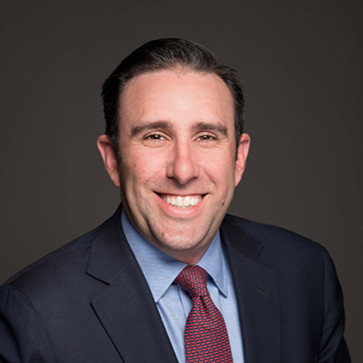
Joe Polakoff is President of Keebeck Wealth Management, a Chicago-based RIA and multifamily office. The firm serves high-net-worth and ultra-high-net-worth clients. He brings over two decades of experience working with complex portfolios. Before Keebeck, he held leadership roles at Merrill Lynch’s Private Banking & Investment Group. His work has focused on supporting sophisticated investors globally. He also spent time in Geneva leading offerings for Merrill Lynch Bank Suisse. His perspective reflects years of experience helping advisors and clients navigate private markets and long-term portfolio construction.
Keebeck Wealth Management is a client of Gridline. The representative of Keebeck has a financial interest in Gridline. Keebeck was not compensated for participating in this case study. The results described reflect Keebeck’s specific experience and are not guaranteed or indicative of future results.